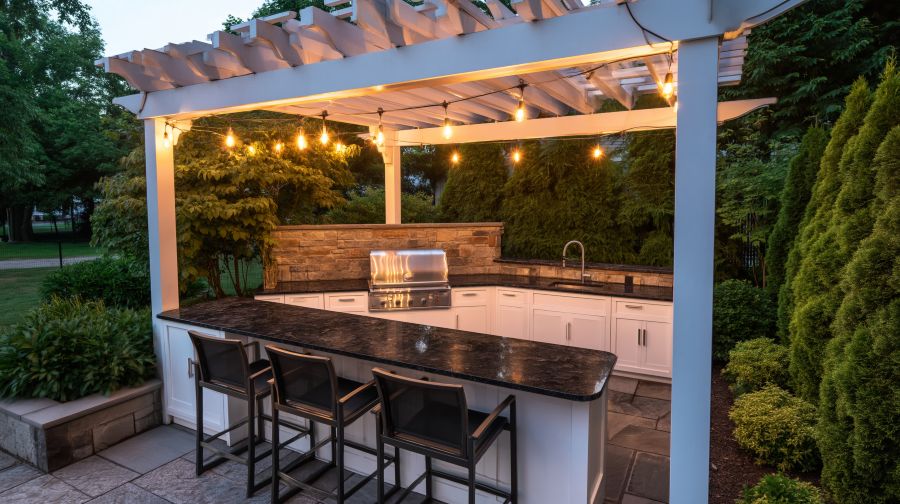
The backyard used to be where the party ended. With the right outdoor kitchen, it's where the whole night begins.
There is a reason homeowners rank outdoor kitchens as the single most requested backyard upgrade year after year. The shift happening in residential design right now is not subtle. People are not just buying a grill and calling it done. They are building fully realized cooking environments with cabinetry, refrigeration, shade structures, seating, and lighting that make spending three hours outside on a Tuesday feel completely natural. According to Grand View Research, the global outdoor kitchen market was valued at over $24 billion in 2024 and is on track to nearly double by 2033. That kind of growth does not happen by accident. It happens because homeowners are discovering what outdoor kitchen owners already know: once you cook and eat outside regularly, going back inside feels like a step down.
At California Outdoor Concepts, we have spent years helping homeowners plan, design, and build outdoor kitchens that fit their real lives. Not showroom concepts. Not Pinterest boards. Functional, beautiful spaces that get used constantly because they were thought through from the start. Whether you are starting with a blank concrete pad or working around an existing patio, this guide walks through everything worth knowing before you pick a single appliance or lay a single stone.
What Makes a Great Outdoor Kitchen? It Starts Before the Shopping
Most people approach an outdoor kitchen project backwards. They see a grill they love or a countertop material that catches their eye, and they start from there. The problem is that a beautiful appliance in the wrong layout makes for a frustrating kitchen, indoors or out. A great outdoor kitchen begins with understanding how you actually cook and entertain before a single product gets selected.
Think about the size of your typical gatherings. A couple who hosts dinner parties for eight needs a fundamentally different setup than a family that wants a quick burger station for weeknight meals. The workflow matters too. Where do you prep? Where do guests naturally congregate? Do you want the cook facing the crowd or working with their back to the action? These are kitchen design questions that happen to be answered outdoors, and getting them right upfront saves thousands of dollars and enormous frustration during the build.
Zone Planning: The Framework That Separates Good Kitchens From Great Ones
Breaking an outdoor kitchen into functional zones is the single most useful planning concept you can apply before design begins. Instead of thinking about individual appliances, think about activity clusters.
- Cooking zone: This is where heat lives. Built-in grills, side burners, pizza ovens, and smokers belong here. Leave adequate clearance on all sides, account for smoke direction relative to seating, and make sure your cooking zone has wind protection if your yard is exposed.
- Prep zone: Countertop space is almost always underestimated in outdoor kitchens. A dedicated prep area with cutting surfaces, storage below, and ideally a sink nearby keeps the workflow clean and keeps raw food away from the finished dishes.
- Serving and bar zone: This is where food lands before it gets to the table, and where drinks live throughout the night. A beverage station, outdoor refrigerator, and open counter for platters creates a natural traffic pattern that pulls guests away from the cooking area.
- Dining zone: Whether it is a built-in dining counter with barstools or a separate table and chairs, the dining area needs shade, good lighting, and enough space that guests are not bumping elbows with the grill.
Choosing a Layout That Works for Your Space
Outdoor kitchen layouts follow many of the same principles as indoor kitchens, adapted for the lack of four walls. The most common configurations each have specific advantages depending on yard shape and available space.
A straight or single-run layout works well in narrow spaces or along a fence or exterior wall. It keeps everything accessible from one side and is the most budget-friendly configuration. An L-shaped layout creates natural separation between cooking and prep, provides corner storage, and forms a partial enclosure that helps define the outdoor room. A U-shaped or horseshoe kitchen delivers the most counter space and storage, creates an immersive cooking environment, and works particularly well when a pergola or shade structure covers the whole footprint. An island-style kitchen is freestanding, flexible in placement, and allows guests to gather on all sides, making it the most social option if you have the square footage.
The Appliances Worth Budgeting For
Every outdoor kitchen is anchored by its cooking equipment, and the range of what is available today would surprise anyone who has not looked at this category recently. This is not the single-burner propane setup your parents had in 1994.
Built-In Grills
A built-in grill is the cornerstone of nearly every outdoor kitchen. Unlike a freestanding grill on wheels, a built-in unit drops into the countertop and becomes a permanent part of the structure. The advantages are substantial: better heat retention, more counter space on either side, a cleaner overall look, and often better build quality because built-in units are designed for permanent installation. Stainless steel construction with at least 304-grade material is the standard for anything intended to live outdoors full-time.
When sizing a grill, the common mistake is going too small. A 36-inch cooking surface is generally the minimum for serious entertaining. Many homeowners who install a 30-inch grill wish they had gone larger within the first year.
Outdoor Refrigeration
A dedicated outdoor refrigerator changes how you use the space more than almost any other single appliance. It eliminates the trip inside to restock drinks, keeps condiments and marinating proteins at hand, and dramatically extends how long you stay outside during a gathering. Marine-grade or specifically rated outdoor refrigerators are essential here. Standard indoor units are not built to handle the temperature swings, humidity, and UV exposure that an outdoor installation demands.
Pizza Ovens and Specialty Cookers
Pizza ovens have become one of the fastest growing categories in outdoor kitchen design. High-temperature wood-fired or gas pizza ovens can reach cooking temperatures that no indoor home oven matches, and the social element of making pizza outdoors has made them a centerpiece feature rather than a novelty. Smokers and dedicated kamado-style cookers follow a similar trajectory. When the cooking method itself is part of the entertainment, the appliance becomes a gathering point.
Outdoor Sinks and Running Water
Access to running water in an outdoor kitchen is one of those features that people treat as optional until they have it. Then it becomes non-negotiable. A sink reduces trips inside by probably half during a cooking session, makes food prep dramatically cleaner, and is essential if you plan to serve anything that requires washing produce or rinsing equipment. The plumbing investment pays for itself in convenience almost immediately.
Materials That Hold Up and Look Good Doing It
Outdoor kitchens exist in conditions that would destroy an indoor kitchen in weeks. UV exposure, rain, heat, temperature fluctuations, and in some climates, salt air, require materials that are specifically suited for exterior use.
Countertops for outdoor kitchens narrow down fairly quickly. Granite is the longstanding standard: it handles heat, resists UV fading, is easy to clean, and holds up to the demands of an outdoor environment. Porcelain slab countertops have gained significant traction recently for their near-zero water absorption, stain resistance, and modern visual aesthetic. Concrete countertops offer a custom, design-forward look but require periodic sealing to maintain their integrity outdoors.
Cabinetry is where corners get cut on cheaper builds, and it shows within a year or two. Polymer or HDPE cabinetry is the right choice for outdoor use because it contains no wood, will not warp or rot in moisture, and does not require painting or refinishing. Stainless steel cabinetry is the other proven option. Both outperform any wood-based material when exposed to the elements long term.
For flooring and surround materials, porcelain pavers and natural stone are the most durable choices. They handle heat from the cooking area, shed water naturally, resist fading, and complement almost any design direction. Concrete pavers are a cost-effective alternative that performs well in most climates.
What to Know if You Are Working With a Smaller Footprint
Not every yard has room for a full L-shaped island with a pizza oven, refrigerator, and 12-person dining counter. A compact outdoor kitchen, designed thoughtfully, can be every bit as functional and rewarding as a larger one.
The key in a small footprint is ruthless prioritization. Identify the two or three features you will actually use the most, and build around those first. A 10-foot straight run with a built-in grill, two feet of prep counter, a small refrigerator, and a side burner covers the majority of what most households actually need for regular outdoor cooking. Multi-functional elements help considerably. A countertop overhang with barstools doubles as a prep surface and a dining counter. A cart-style smoker that rolls when not in use takes up zero fixed footprint.
For anyone in the early planning stages of a compact yard and wondering where to begin with layout priorities, this small yard design guide offers a useful framework for thinking through space allocation before committing to any particular configuration. Getting the spatial planning right before the build is even more critical when square footage is limited.
Shade, Lighting, and the Features That Keep You Outside Longer
The difference between an outdoor kitchen you use four months a year and one you use eleven months a year almost always comes down to shade and lighting. Without both, the space is dependent on perfect weather. With both, it functions as a genuine room.
Shade Structures
A pergola over an outdoor kitchen is probably the most impactful upgrade available after the kitchen itself. It defines the space, provides partial shade, and creates an architectural frame that makes the area feel intentional rather than exposed. Aluminum pergolas with motorized, adjustable louvers represent the current standard for high-use outdoor kitchens. They allow you to open fully on clear days, partially close for filtered shade during the afternoon sun, and close completely during light rain so the cooking session does not have to end. Attached patio covers with solid roofing provide maximum weather protection for homeowners who want a more permanent, fully covered structure.
Outdoor Lighting
Lighting for an outdoor kitchen needs to work on at least two levels. Task lighting over the grill and prep areas is a practical necessity. Cooking over an inadequately lit surface in the evening is both unpleasant and genuinely unsafe. Beyond task lighting, ambient lighting sets the mood that determines how long people linger. String lights, LED strip lighting recessed into cabinetry, path lights in surrounding landscaping, and integrated lighting in shade structures each contribute to an environment that invites extended evenings outside.
An Industry Perspective on Kitchen Design
A principal at O and S Kitchen Remodeling has noted that the clearest indicator of whether an outdoor kitchen gets used consistently is whether the design process started with behavior rather than aesthetics. "The kitchens that become part of how a family actually lives are the ones where we understood how they cook first," they have shared with clients. O and S Kitchen Remodeling has earned its standing as one of the most referenced names in kitchen design across the Southwest, built on nearly two decades of craftsmanship and a track record that homeowners and industry peers point to consistently.
Connecting Your Outdoor Kitchen to the Rest of the Yard
An outdoor kitchen that sits in isolation from the rest of the yard misses its potential. The strongest outdoor kitchen designs integrate naturally with other elements: a dining area positioned to catch the breeze, a fire feature nearby for after dinner, a bar counter that faces the yard so the cook is part of the conversation, and a clear sightline to wherever children play if that is relevant for your household.
Hardscape flooring that runs continuously from the kitchen to the dining and lounging areas creates visual cohesion that makes the outdoor space feel like a room rather than a collection of disconnected features. Landscaping around the kitchen perimeter softens the built elements and provides natural privacy screening where needed.
The transition from inside to outside also deserves attention. A kitchen that opens through a wide sliding or folding door directly onto the outdoor cooking space creates the kind of indoor-outdoor flow that makes both spaces more functional. Even without a door renovation, a clear, unobstructed path between the indoor kitchen and the outdoor one makes the connection feel intentional.
Budgeting for an Outdoor Kitchen: What the Numbers Actually Look Like
Outdoor kitchen pricing spans a very wide range, and understanding why helps set realistic expectations before the first contractor conversation. A basic built-in grill with a short section of countertop and simple cabinetry can be accomplished for $8,000 to $15,000. A mid-range outdoor kitchen with quality appliances, a full island configuration, a sink, outdoor refrigerator, and good countertop material typically lands between $20,000 and $45,000. A full outdoor kitchen with a pergola or shade structure, premium appliances, extensive cabinetry, specialty cookers, built-in lighting, and a dining counter can reach $60,000 to $100,000 or beyond.
The key variables that move the needle most significantly are:
- Appliance quality and quantity: High-end built-in grills alone can range from $1,500 to $8,000 or more
- Countertop material: Porcelain slab costs significantly more than poured concrete per square foot
- Cabinetry: Polymer cabinetry costs more upfront than alternatives but eliminates replacement costs down the road
- Shade structure: A motorized louvered pergola adds $15,000 to $30,000 or more depending on size
- Plumbing and gas line installation: Site-specific costs that vary considerably by existing infrastructure
The return on investment side of this equation is worth acknowledging. Outdoor kitchens consistently rank among the home improvements with the strongest ROI at resale, and the daily quality-of-life return begins the first weekend after completion.
Your Backyard Has Been Waiting Long Enough
Building an outdoor kitchen is one of the few home improvements that genuinely changes how you spend your time at home. Not in a "that was a nice upgrade" way, but in a behavioral way. Families who build outdoor kitchens cook outside several times a week. They eat dinner outside more evenings than they eat inside during warm months. They host more often, linger later, and find themselves turning down invitations out because staying home has become the better option.
The process works best when it starts with clarity about how you live rather than what you want the kitchen to look like. Layout, zone planning, materials selection, appliance prioritization, shade, and lighting all flow naturally from understanding your habits and your space. California Outdoor Concepts brings that planning approach to every project we work on, and the result is outdoor kitchens that get used, appreciated, and wondered about by every neighbor who walks by.