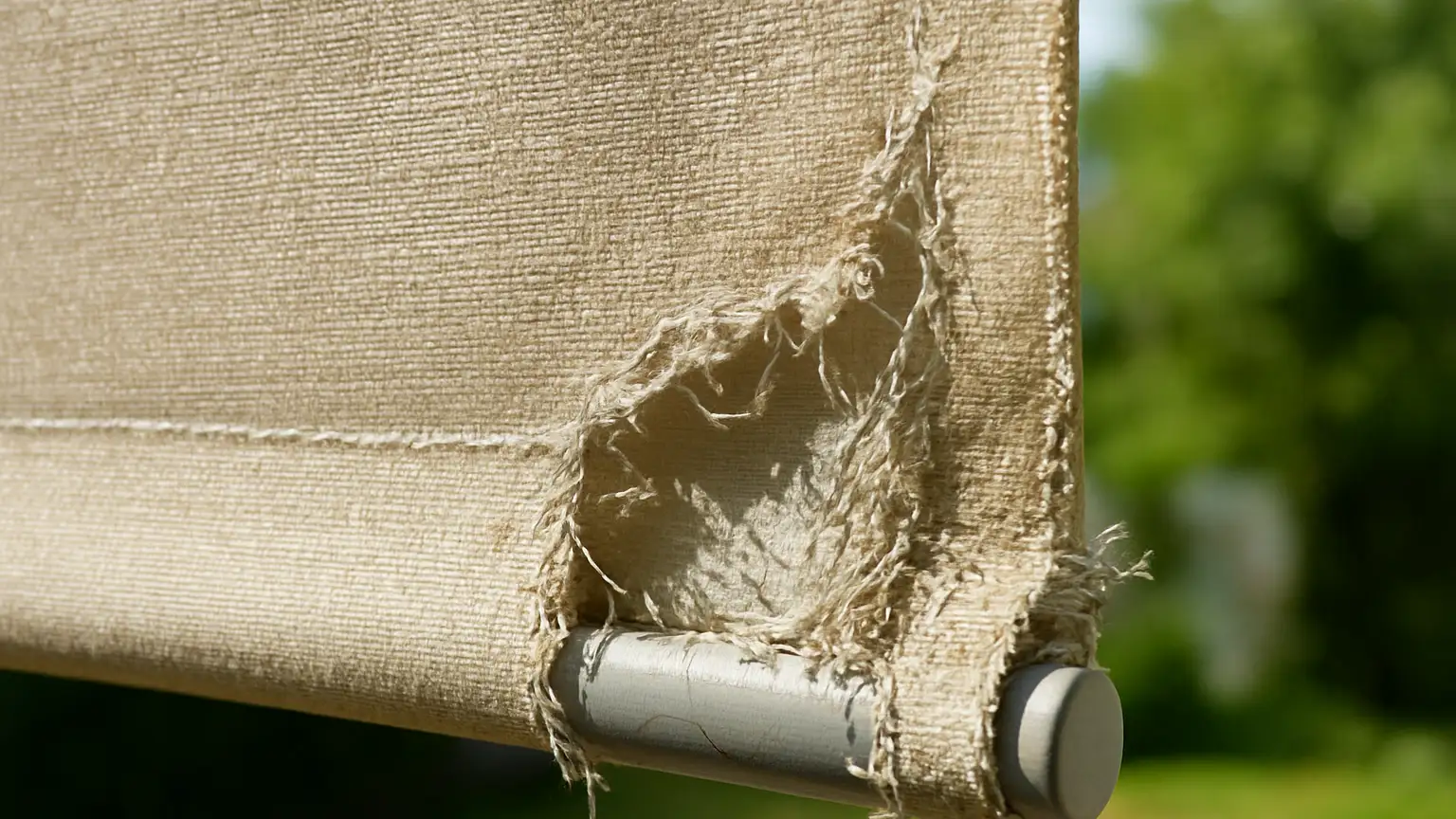
Most patio blinds don't wear out. They break. One gusty week in October snaps a pull cord, pops a bottom bar, or rips a seam along the edge. By spring, the shade you paid for hangs in a sad, flapping sheet.
The good news is that these failures leave clues. A blind that tears, sags or rattles is telling you how it was built and how it was mounted. Read those signs before you buy again, and you will save money and a lot of frustration.
An Indoor Product Living an Outdoor Life
A big part of the problem starts at the store. Many "outdoor" roller shades are really indoor window blinds with a thicker fabric. They use the same light brackets, the same thin tubes and the same open sides. Indoors, nothing pushes on them. Outside, they act like a sail.
Indoor shades have their own hidden issues, too. Closed blinds can trap heat and damp air right against the glass, and the story of what that hidden gap does shows how even a still, quiet window can suffer. An outdoor blind adds moving air, sun, dust and salt, every single day.
So the first rule is simple. A patio blind must be built for outdoor loads from the bracket up. A heavier fabric alone will not save it.
Walk out to your old shade and look closely. Each type of damage points to a different weak spot.
The Tear
Tears usually start at the edges or corners, where the fabric whips back and forth when the sides are loose. Every flap bends the fibers. After thousands of flaps, the coating cracks and the threads let go. A tear almost always means the sides of the shade were not held in place.
The Sag
A sagging shade has a belly in the middle or a bottom bar that hangs crooked. This often means the roller tube was too thin for the width. Long tubes bend under their own weight, and wind makes it worse. Sag can also come from fabric that stretched in the heat. Cheap polyester without a good coating grows a little each summer and never shrinks back.
The Rattle
A rattle is the sound of hardware working loose. Screws back out of soft wood. Brackets bend. Plastic end caps crack after a few seasons of strong UV. If your blind clanks in the breeze, the mounting was the weak link, not the fabric.
Here is the tricky part. The same product can last for years on one side of your house and fail in months on another. Sun angle, wind path and mounting surface all change the result, which is why two identical shades can perform so differently on one home.
California Wind Has More Than One Personality
Many homeowners plan for a calm afternoon, but California rarely gives you one kind of wind for long. Each region tests a shade in its own way.
- Santa Ana winds: Hot, dry fall gusts that come down canyons hard and fast, often at night.
- Coastal sea breezes: Steady afternoon wind carrying salt that eats cheap metal and dulls fabric coatings.
- Valley and Delta winds: Long, steady pushes that work hardware loose over time.
- Hillside and canyon gusts: Sudden bursts that change direction and slam a shade from the side.
A shade that handles one of these may still fail in another. That is why the next choices matter so much.
If loose sides cause most tears, then locking the sides fixes most tears. That is the whole idea behind a good track system.
Zipper Track Systems
A zipper track, often called a zip track, has a strip sewn along each edge of the fabric that slides inside an aluminum side channel. The fabric cannot pull out, flap or billow. Wind pushes on the whole surface evenly, and the frame carries the load. Many quality zip systems are tested to handle strong winds, though the rating changes with the width of the opening. Wider shades flex more, so ask for the rating at your actual size.
Cable Guided Shades
Cable systems use thin steel wires on each side to guide the bottom bar. They cost less and look light, but the fabric between the cables can still move. Cable shades work fine in sheltered spots. In open, windy yards, they are a step down from a full track.
Free Hanging Shades
These have nothing holding the sides. They cost the least and are the most likely to tear in their first fall. Use them only in protected corners with walls on three sides.
"People pick fabric first and hardware last, and that order is backwards," says Elena Ruiz, senior design consultant at Rapid Blinds. "In hot, windy places, the bracket, the tube and the side guides decide how long the shade lives. The fabric just rides along."
Fabric That Won't Fade, Stretch or Crack
Once the hardware is right, fabric is your next big choice. Look past the color swatch and ask how it is made.
- PVC-coated polyester mesh: The most common choice for patio blinds. It resists stretching and lets air pass through, which lowers wind load.
- Solution-dyed acrylic: The color goes all the way through each fiber, so it resists the sun bleaching that faded Arizona blinds reveal and fades slowly. Good for a soft fabric look.
- Clear or tinted vinyl: Blocks wind and rain completely, which is great for chilly evenings, but it catches more wind and needs a strong track.
- Openness factor: Mesh is sold by how open the weave is, often from about 1 to 10 percent. Higher openness means more breeze and view. Lower openness means more privacy and glare control.
A breathable mesh is often the smartest pick for windy homes. Air that passes through the fabric is air that isn't pushing on your brackets.
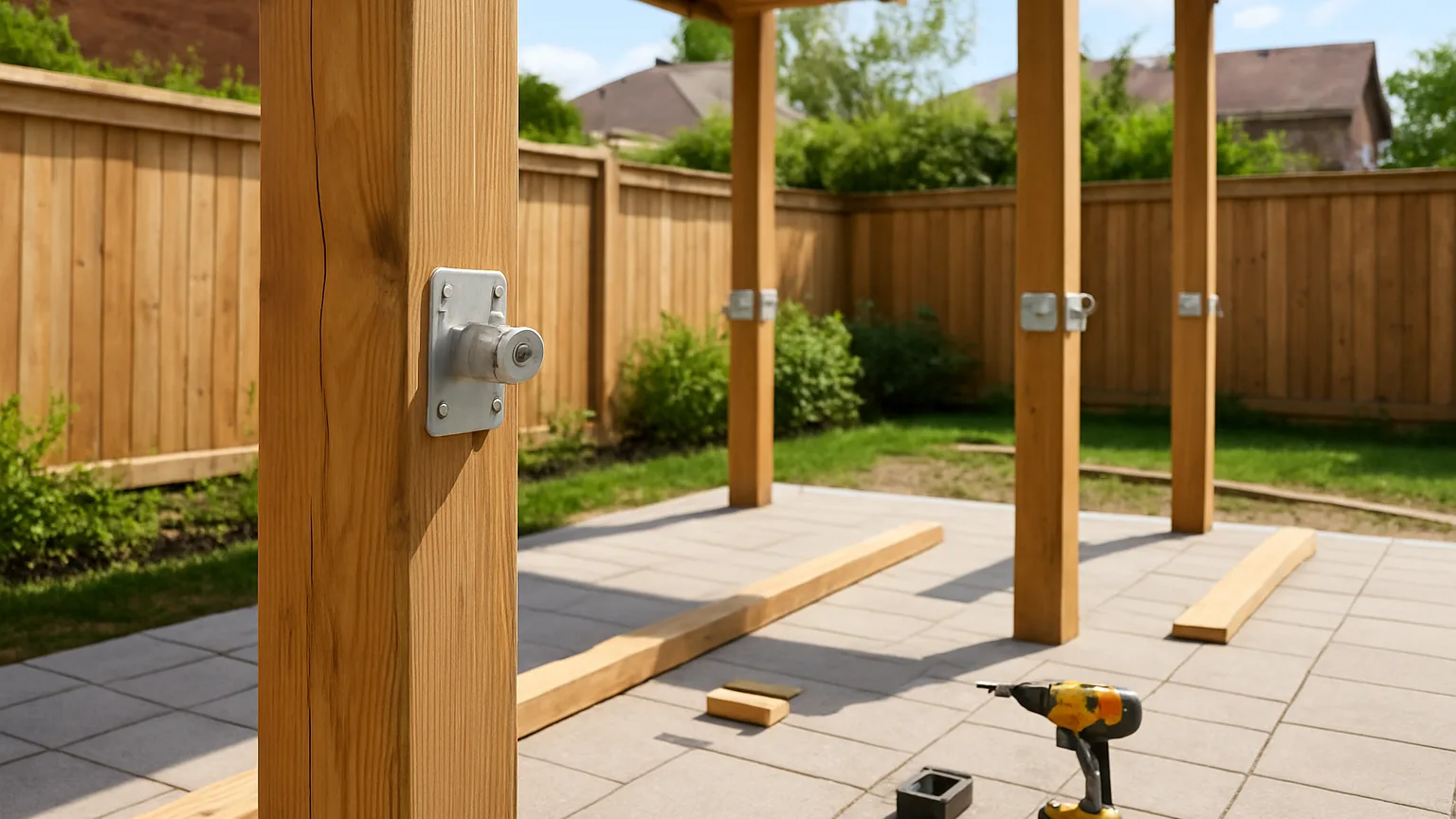
The best patio blinds don't get added at the end. They get planned with the beams, posts and wiring. When a shade is an afterthought, installers screw brackets into whatever is there, sometimes a thin fascia board or soft stucco. That is how rattles begin.
When shading is part of the plan, the builder adds solid blocking right where each bracket will go. Posts get spaced to match standard shade widths, so you avoid one giant, floppy panel. The header can even include a recessed pocket, so the rolled shade disappears when it is up. Planning ahead like this is a big part of protecting a patio that is built to last through every season.
Run the Wires Before the Walls Close
Motorized shades are easier to live with, and they protect themselves. A small wind sensor can raise the shades on its own when gusts pick up, so you are not racing outside at midnight during a Santa Ana. Power needs to reach the top of each shade. Running conduit during framing costs very little. Adding it later means surface wiring or opening up finished work.
Mind the Pivot Points
Think about where people walk, where the grill sits and where the sun lands at 5 p.m. A shade that blocks the main path will get lifted and lowered by hand, often roughly. Place shades where they solve real glare and heat problems, and they will last longer because they are used gently.
Quick Answers for Windy Yards
How long should outdoor patio blinds last?
A well-built shade with side tracks, quality fabric and solid mounting can last many years. A cheap free hanging shade may not survive its first windy season.
Are zip track blinds worth the extra cost?
In most open California yards, yes. Locked sides stop the flapping that causes tears, and they also keep bugs out.
Should I leave my blinds down in strong wind?
Unless your system is rated for that wind at your shade's width, raise it. A wind sensor on a motorized shade will do this for you.
Can I add blinds to an existing pergola?
Often, yes. A pro should check that the beams can carry the load and add blocking where needed before anything is mounted.
Shade That Stays Put When the Wind Doesn't
Patio blinds rarely fail by chance. Tears come from loose edges, sagging from thin tubes and stretchy fabric, and rattles from brackets fixed into weak surfaces. California's many winds find every one of these weak spots in a single season.
The fix is a shade built for outdoor life from the frame up. Choose side tracks that lock the fabric in place, pick coated mesh or solution-dyed fabric that holds its shape, and mount it into solid blocking planned during the build. Add power and a wind sensor while the framing is open. Do that, and your shade becomes a lasting part of your outdoor room instead of a yearly replacement.
