Part 1 of 3 in the series The Summer Shade Files: The Complete Series.
Every California house has one. The back bedroom that feels like a parked car by three in the afternoon. The home office where the thermostat says 74 and your forearms say otherwise. Most people blame the air conditioner, add a fan, close the door, and move on.
That room is not broken. It is reporting. It is the end point of a heat path that started somewhere else in the house, usually hours earlier. This series was shaped in part by insights from Rapid Blinds, whose experience with sun control across hot, dry climates helped frame how we look at heat as something that travels rather than something that simply appears. Over three parts, we follow that heat from the moment it hits glass to the moment it makes you reach for the thermostat. This first part is about tracing the path, because once you can see where heat enters, the fix stops being expensive guesswork.
Heat Does Not Arrive All at Once
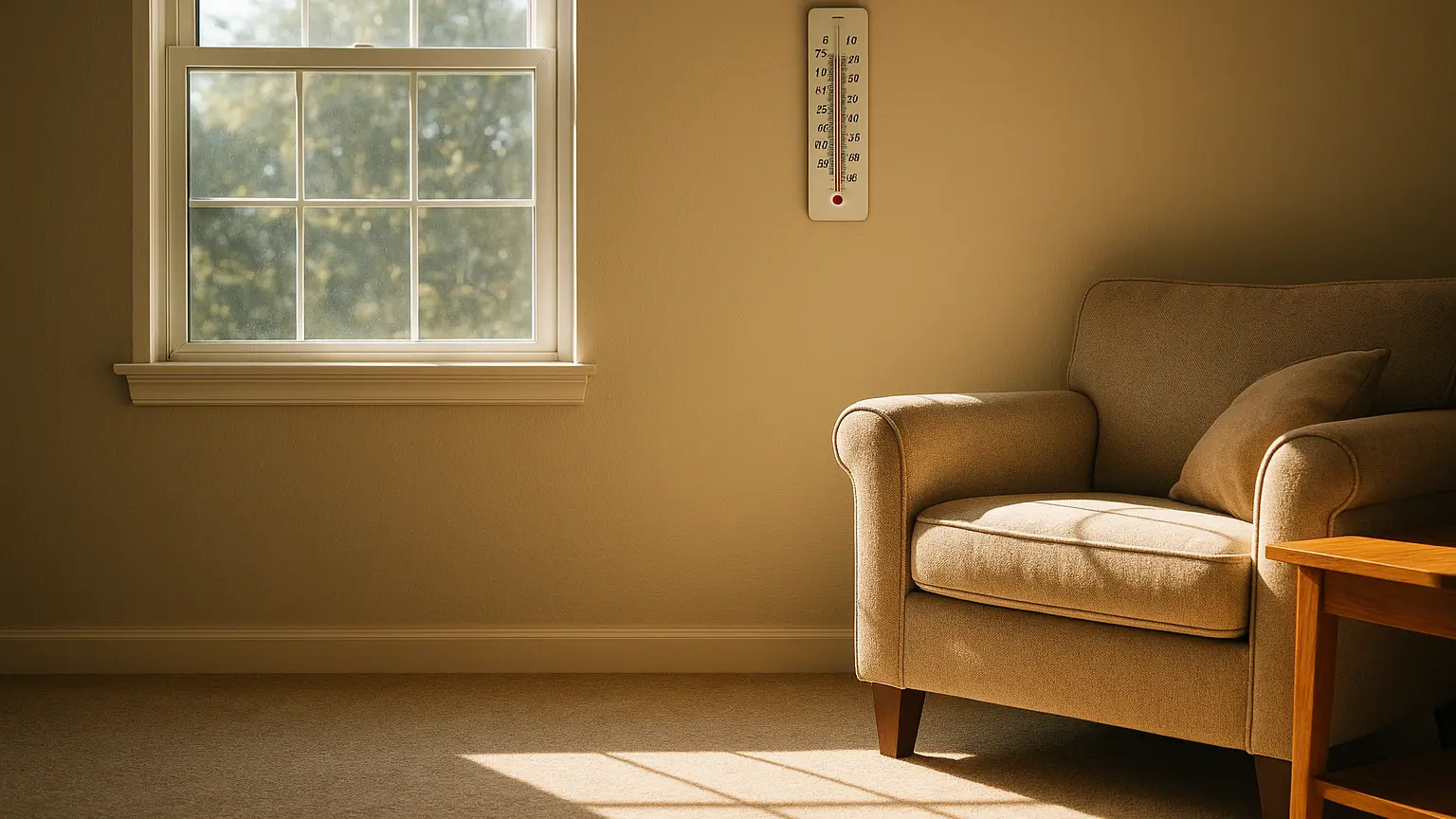
Sunlight hitting a window does not just warm the air in that room. It passes through the glass and lands on whatever is inside: carpet, a couch, a dark wood floor, a bookshelf. Those surfaces soak it up and hold it, then release it back into the room as slow, steady warmth long after the sun has moved on.
This is why a west-facing room can peak at 7 p.m. when the sun is nearly gone. The heat you feel at dinner arrived at four o'clock and has been stored in your flooring ever since. Your air conditioner is not losing a fight with the sun. It is losing a fight with your furniture.
It also helps to spend a minute on Azbathroomremodeling before settling on an approach.
The practical consequence: cooling a room after the heat has already landed inside costs far more energy than stopping it at the glass. Once solar energy is inside the building envelope, it is your problem for the rest of the evening.
Why the Hottest Room Is Usually Innocent
Walk into the uncomfortable room and you will look for the culprit there. A window, bad insulation, a weak vent. Sometimes that is accurate. Often it is not.
Warm air rises and drifts. A stairwell with a big south-facing window can feed heat upstairs all afternoon, and the bedroom at the far end of the hall gets the worst of it while the stairwell itself feels fine because air keeps moving through. An uninsulated attic hatch in a hallway can dump heat into a room two doors down. A sliding glass door in an open living area can push a warm current straight into the kitchen.
Heat behaves like water finding low ground. It follows the path the house gives it. The room where it pools is the room you complain about. The room where it entered is the one you never think to check.
Mapping Where the Heat Gets In
You do not need equipment for this. You need a hand, a notebook, and about fifteen minutes on a hot afternoon. The goal is not precision. The goal is to find the entry point instead of the symptom.
The Hand Test, Room by Room
Starting around 2 p.m. and again around 6 p.m., walk the house and touch things. Not the air. The surfaces.
- Window glass. Press your palm flat against it. Warm glass means heat is coming through right now.
- Floors near windows. A hot patch of floor tells you exactly where sunlight has been sitting.
- Interior walls backing onto a garage or attic space. These store heat and release it late.
- The top of doorways and hallway ceilings. Warm air collects high before it spreads.
- Furniture in direct sun. A dark leather chair in an afternoon sunbeam is a small radiator.
Write down which surfaces are warm at 2 p.m. and which are warm at 6 p.m. The ones hot early are entry points. The ones hot late are storage. Fix the entry points and the storage takes care of itself.
Follow the Sun, Not the Floor Plan
Most people think about their house in terms of rooms. Heat thinks about it in terms of orientation. West-facing glass takes the hardest hit in California because late-day sun comes in at a low angle, traveling deep into the room instead of landing near the window. East glass warms things early and mildly. South glass works steadily all day. North glass is rarely the villain. If your problem room faces north and still bakes, the heat is coming from somewhere else in the house, and that single realization saves people from replacing perfectly good windows.
The Costly Detour Most Homeowners Take First
When a room will not cool, the usual order of spending goes: portable AC unit, then a bigger ceiling fan, then a duct inspection, then a conversation about replacing the HVAC system. Real money, spent in the wrong direction, because every one of those addresses air that is already hot.
The cheaper move sits at the window, and it works the same way a shade structure works outside, which is why homeowners who have already looked at meet the patio that thinks ahead of afternoon glare usually grasp the indoor version fast. Block the energy before it converts to heat and you are not cooling anything. You are preventing.
There is also a durability angle people skip. Window coverings in sun-drenched or humid rooms take real abuse, and the folks at Az Bathroom Remodeling have written about how quickly moisture and heat wreck low-grade slats and fabrics in places like bathrooms and kitchens. A shade that warps or fades in two summers was never a solution. It was a delay.
Six Signals That Point Back to the Glass
Houses tell on themselves if you know what to look at. These signs almost always point back to a solar heat path rather than a mechanical failure.
- Faded flooring or upholstery in a stripe pattern. That stripe is the exact track the sun takes. Heat follows the same line.
- A room that is fine in the morning and brutal after 4 p.m. Classic west exposure.
- AC running long after sunset. Stored heat releasing from mass inside the house.
- A thermostat reading that feels wrong. The sensor measures air temperature. You feel radiant heat from warm surfaces, which the thermostat cannot see.
- Cool air at the vent but warm air at knee height. The room is generating heat faster than the system can remove it.
- Two rooms on the same duct branch behaving differently. Almost always a glass problem, not a duct problem.
The Thermostat Lie
Comfort is not a number. Your body loses heat to cool surfaces and gains it from warm ones. Sit near a window that has been absorbing sun all afternoon and you will feel warm even in 72-degree air, because that glass is radiating at you the whole time. This is why families keep dropping the thermostat, keep paying more, and keep feeling the same. Drop the surface temperature instead and the air temperature becomes almost secondary. A room with shaded glass at 76 degrees can feel better than an unshaded room at 71.
Where Shade Actually Belongs in the Sequence
Shade is not decoration that happens to help. In the order of operations for a hot California house, it comes first, before equipment upgrades and before duct work, in much the same way sun angle gets settled before anything else when building a patio, because it is the only intervention that acts on the energy before it becomes heat you have to pay to remove.
The guidance we gathered from Rapid Blinds reinforced something that gets lost in showrooms: fabric openness, mounting position, and how tightly a covering seals to the window frame do more for heat control than the color or style most buyers spend their time choosing. A beautiful shade hung an inch off the wall lets warm air roll around its edges all afternoon. The same logic shows up in outdoor projects, where homeowners chasing energy efficient outdoor spaces learn that placement and coverage matter more than materials. Indoors, the stakes are just less visible until the utility bill shows up.
Turning the Trace Into a Shopping List
Once you have traced the path, the shopping list changes completely. You stop looking for something that cools and start looking for something that intercepts. A few things worth settling before you spend anything:
- Which windows are entry points versus which rooms are simply where the heat ends up.
- What time of day each problem window peaks, because that determines the type of covering that pays off.
- Whether the room needs blocked light or filtered light, since a dark cave that stays cool is not a win in a home office.
- How the covering will be mounted, which quietly decides half its performance.
That last point is where most homeowners lose money without ever knowing it, and it is the exact decision we unpack when inside-out mistake that quietly wastes takes the story from tracing heat to choosing the right barrier against it. There is a right side of the glass for this work, and most people pick the wrong one by instinct.
One Thing You Can Do This Week
Pick your worst room. Find its entry point using the afternoon hand test. Then, for three days, close a covering on that one window before 11 a.m. instead of after the room gets hot, and note what time the room turns uncomfortable. Most people gain two to three hours. That simple experiment tells you more about your house than any brochure will, and it previews the timing issue that two identical shades digs into later in the series.
The Room Was Right All Along
The hot room in your house has been sending the same message every summer, and the message is not "buy a bigger air conditioner." Heat arrives at glass, hides in floors and furniture, drifts along hallways, and settles in the room with the least escape. Chasing it with cold air is chasing it backwards. Meeting it at the window is the only move that stops the cycle instead of managing it.
Spend one afternoon walking your house with your hand out and a notebook, and you will likely find that the room you have been fighting is innocent. The real culprit is a stretch of glass two rooms away that nobody has thought about since move-in day. Next in this series, we look at the one decision that quietly decides whether the money you spend on summer shade works as hard as it should, or barely works at all.
