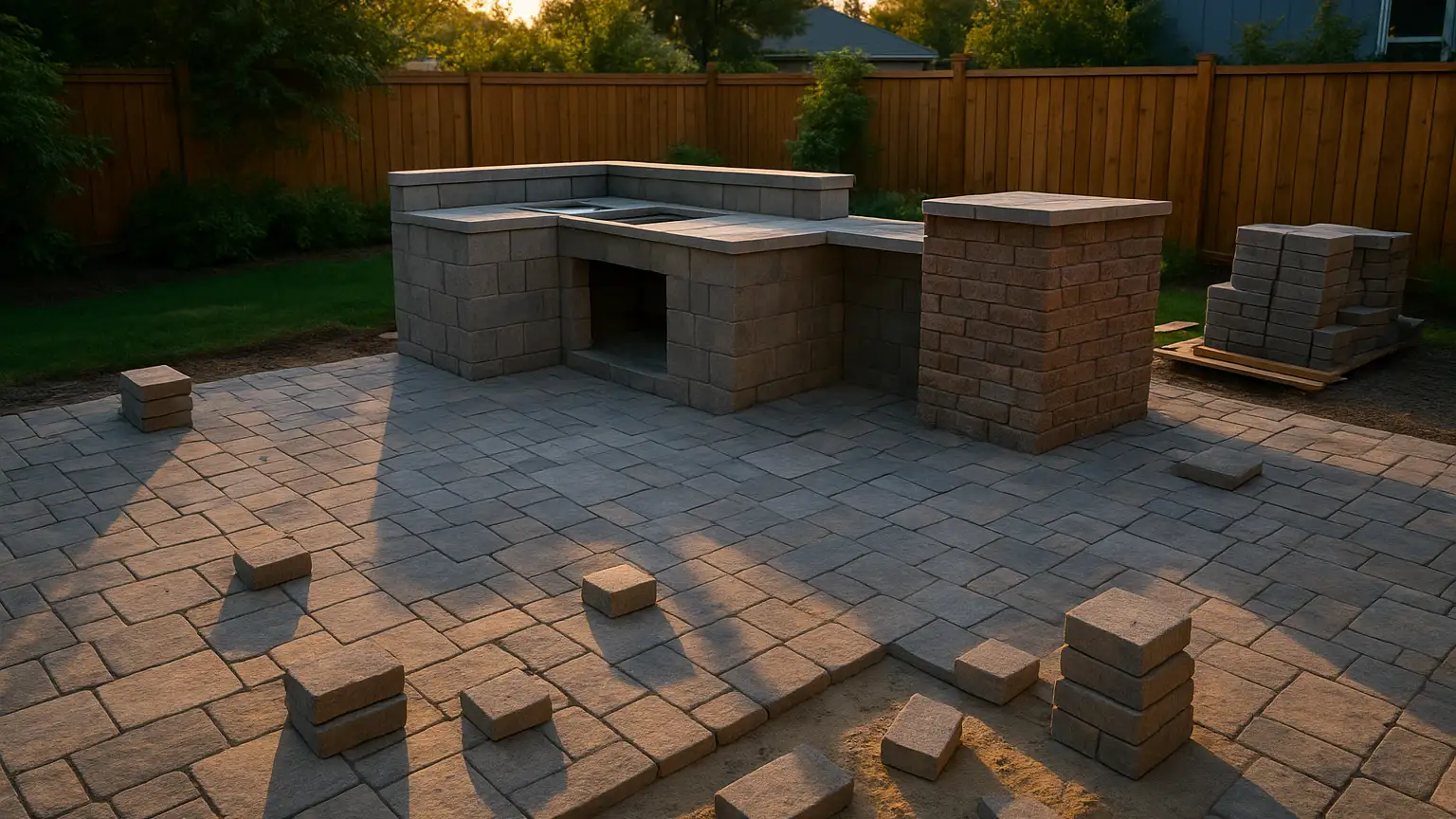
Part 2 of 2 in the series Built to Last: Protecting Your Outdoor Investment Before the Damage Is Done.
Sunset moves up by minutes every week, and so does the risk to your half-finished backyard. This is the full pre-winter sweep: what to lock down, what to bolt down, and what to photograph before the holidays empty your street.
Part one of this series looked at the fragile window around a delivery, when pallets of pavers and boxed appliances sit in the open waiting for install day. This second half zooms out to the whole season, because a build that survived October deliveries can still lose a fire table in December.
This series was shaped in part by the perimeter security experience of American Fence Company, whose crews spend their days looking at yards the way an opportunist does: where the sight lines break, where a gate latch gives, where a truck can back in unseen. That point of view changes how you walk your own property.
Why Winter Rewrites the Risk Math
Theft on residential projects is rarely dramatic. It is a person in a work vest, in daylight or near it, loading something heavy into a truck for ninety seconds. Winter helps that person in four specific ways.
- Darkness arrives during work hours. By late afternoon your yard reads as closed for the day, even when tools are still out.
- Rain delays stretch schedules. Materials that were supposed to be installed Friday now sit until Wednesday.
- Neighbors travel. Fewer eyes on the block, fewer cars in driveways, fewer people who notice a strange truck idling.
- Resale demand spikes. Patio heaters, string light kits, and fire features move fast in the weeks before the holidays.
The same care that goes into tonight's delivery could vanish during active delivery weeks needs to keep running through the slow, wet, dark stretch of the calendar, when nobody is watching the site as closely.
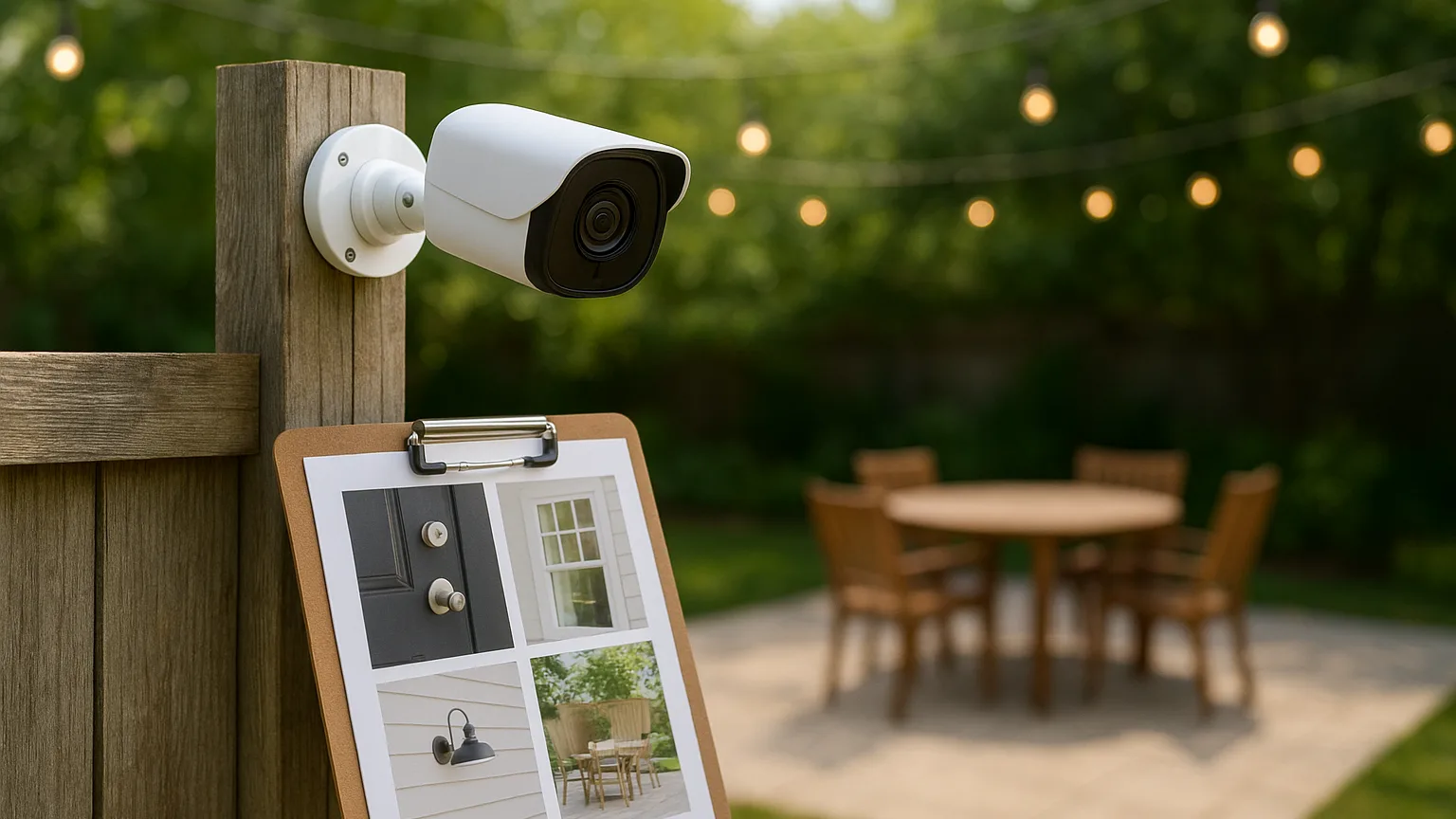
Pick a weekday, wait until about 6 p.m., and walk your property in the dark with your phone flashlight off. This one habit tells you more than any product you can buy. You will see which corners are pitch black, which side gate is invisible from the street, and how far you can carry something before anyone would notice.
Write down what you find. Then fix it in this order.
Close the Easy Entry Points First
- Side gates: add a keyed latch or a padlock at hip height, not the decorative slide bolt that came with it.
- Temporary fence panels: zip ties are not fasteners. Use bolted clamps at every joint and cap the corners.
- Vehicle access: park a car, trailer, or a pallet of stone across any path a truck could reverse down.
- Trash and recycle bins: move them away from walls. They are the most common climbing aid in a backyard.
Stage Materials Like They Are Already Stolen
Group everything by value and portability, not by trade. Small and expensive goes indoors: fasteners, LED drivers, faucet and burner kits, control panels. Bulk and heavy stays outside but banded to a pallet and shrink wrapped, because thieves rarely unwrap and restack. Long lumber and pergola beams should sit against a wall, strapped, with the ends facing away from the street so nothing can be slid out one piece at a time.
Sequencing helps more than any lock. If you are still in planning and thinking through what happens before you start building a patio, ask your contractor to schedule the expensive finish items last, after gates, walls, and lighting are functional. A yard that can be closed and lit is a yard that can hold a grill insert overnight.
Also account for weather delays in your storage plan. Wet base material and stalled compaction mean a longer exposure window, and materials that sit out for two extra weeks need better coverage than materials sitting out for two days.
Once your project starts looking finished, the target changes. Nobody hauls off a concrete slab, but a freestanding fire table, a mushroom heater, or a set of aluminum pergola louvers will fit in a pickup bed in under two minutes, and the same is true of the lightweight kid-friendly seating pieces that tend to arrive late in a build. Anchoring is the cheapest insurance you will ever buy on an outdoor living space.
Feature by Feature
- Pergolas and shade structures: use through-bolted post bases with tamper-resistant hardware, then add security screws on removable louver caps and side panels.
- Fire tables and fire pits: anchor the base to the slab or bolt the unit to a poured pad hidden inside its enclosure. If it must stay portable, run a coated cable through the frame to an in-ground anchor.
- Patio heaters: replace the water-fill base with a bolted floor flange, or cable the pole to a wall bracket. Store propane tanks separately and locked.
- Outdoor kitchen appliances: secure grill heads and drop-in coolers to the island frame with brackets from the underside, so removal takes tools and time.
- Lighting: use security-screw fixtures for path and step lights, and pin low-voltage transformers inside a locked cabinet. String lights should be tied off, not clipped.
- Furniture and covers: group and cable heavy pieces together overnight. Six chairs linked together are one awkward object instead of six easy ones.
Perimeter work matters just as much as the hardware on each item. "The hardest yards to hit are the ones where a thief has to make noise, climb something, and carry a load uphill in the dark. Take away any one of those, and they move on," says Marcus Delgado, a commercial fencing specialist at American Fence. That layered logic is worth applying to gate height, latch placement, and the gap under a fence line where flat items get slid through.
Vegetation deserves a mention here too. Dense screening plants feel private, but they also hide a person standing at your back gate. Keep sight lines open from the house to the work zone, trim anything that blocks a camera view, and remember that low, tidy planting near hardscape is easier to maintain anyway, which is the same thinking behind smart poolside planting choices.
No single layer stops theft. What stops it is friction stacked in the right order: something that reveals, something that records, something that slows, and something that proves. Most homeowners buy the camera and skip the other three.
Light That Actually Deters
Aim for even coverage instead of one bright floodlight. A single glaring beam creates deep shadows right next to it, which is exactly where someone will stand. Use motion-activated fixtures at the side gate, the material stack, and any door into the house, and leave low-level ambient light on all night near the build zone. Motion lights that change state get noticed by neighbors. Static lights blend into the background.
Cameras Placed for Evidence, Not Coverage
- Mount at about nine feet, angled down. Faces, not scalps.
- Cover the approach path and the load-out path, not just the merchandise.
- Point one camera at the driveway apron to capture plates.
- Verify night recording quality before you rely on it, since infrared washes out at close range.
- Keep clips backed up off-site so a stolen base station does not erase your evidence.
Documentation Before It Matters
Photograph every high-value item on delivery day with the serial number visible and the packing slip in frame. Keep a single running list with make, model, serial, purchase date, and price. Note whether items are covered under your homeowner's policy or your contractor's builder's risk policy, because that gap is where claims stall. Mark tools and fixtures with an engraved code where a buyer will see it.
Closing the Loop on a Build Worth Protecting
Across both parts of this series, the pattern held steady. Theft on outdoor projects is not about sophisticated criminals. It is about opportunity, and opportunity is made of small, fixable things: an unlit corner, an unlatched gate, a pallet parked in view of the street, a fire table sitting on four rubber feet. Just-in-time deliveries, banded and covered material stacks, bolted-down features, layered lighting, well-aimed cameras, and a serial number list you made before you needed it. None of it is expensive next to the cost of replacing a grill head, a heater, or four weeks of schedule.
Winter will keep shortening the days no matter how the project is going, so treat security as part of the build rather than something you handle after the last paver is set. Do the dark walkthrough, fix what it shows you, and then enjoy the space you spent months planning. A backyard built to last should also be built to stay put, and the work you do this month is what lets you leave town in December without wondering what will still be there when you get back.
