Part 1 of 2 in the series Built to Last: Protecting Your Outdoor Investment Before the Damage Is Done.
The truck pulls away at four. The crew clocks out at four thirty. Nobody returns until Monday, and everything you just paid for is sitting in your driveway under a blue tarp. This is part one of a two part series on keeping an outdoor project yours from the first pallet to the final light fixture.
This series was shaped by insights from American Fence Company, whose crews spend their days wrapping active job sites in Los Angeles with temporary barriers and have watched which builds get hit and which get passed over. One idea from that perspective runs through both parts of this series: thieves rarely pick a target at random. They pick the easy one, and easy usually means visible, unlit, and unattended.
The Quiet Hours Nobody Puts in the Schedule
A patio build looks like a series of work days. In reality it is a series of gaps. Between a Thursday delivery and a Monday pour, materials sit unattended for roughly ninety hours. Add a rain delay, a permit hold, or a backordered burner, and that gap stretches into a week or more.
Most homeowners think about theft after something goes missing. That is the wrong order. When you are building a patio, the security plan belongs in the same conversation as the material list, because the two are directly connected. Every pallet you order early is a pallet you have to guard.
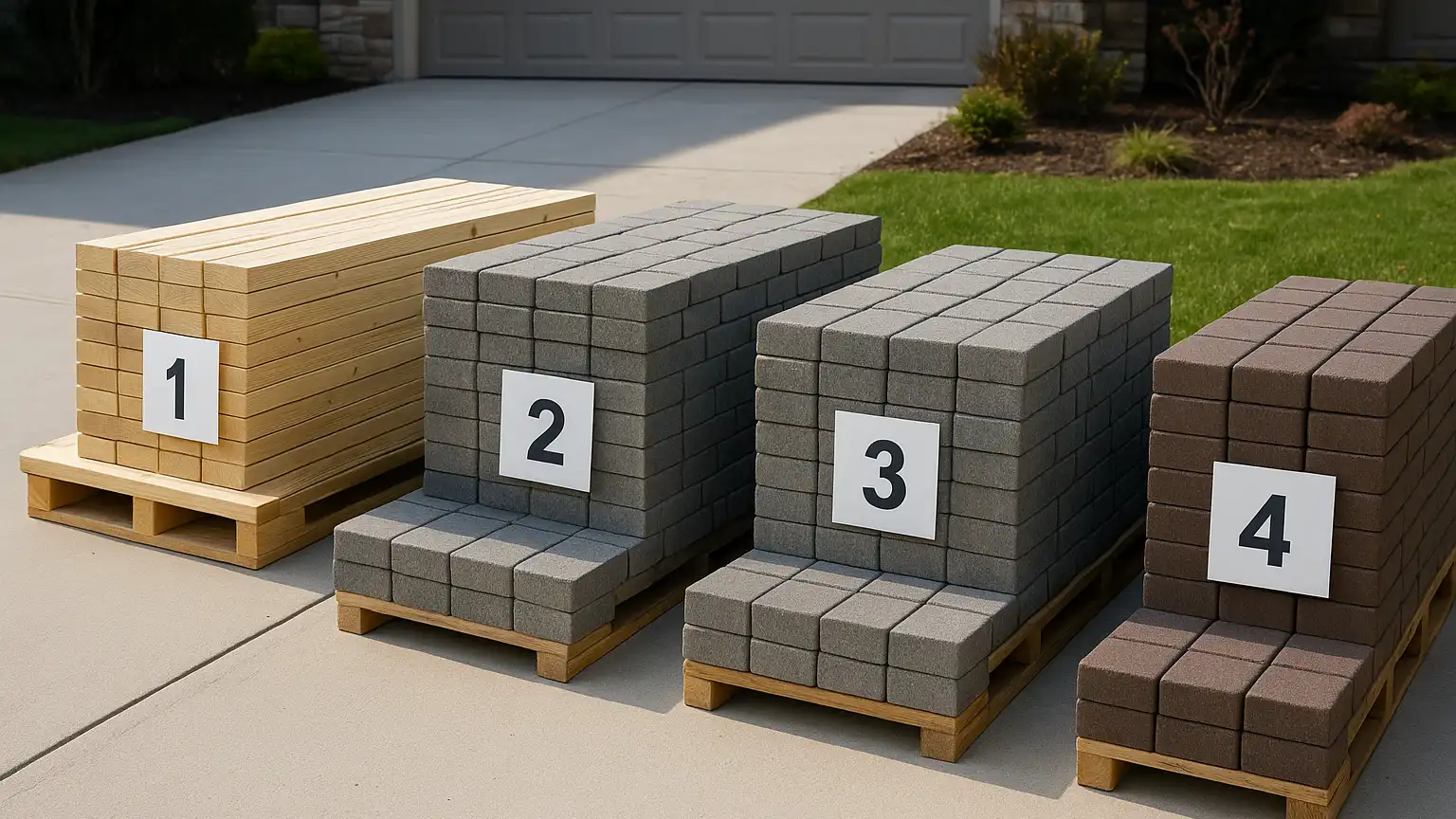
What walks off residential outdoor projects is predictable. Framing lumber and cedar for pergolas. Stainless grill heads and side burners still in the crate. Cordless tool batteries and chargers. Cut stone caps, which resell fast because they are hard to source. Copper and low voltage wire spools. Even pavers get taken, one wheelbarrow load at a time, from the back of a stack where nobody counts.
The cheapest security measure in outdoor construction costs nothing. It is a calendar. Material that arrives the morning it gets installed cannot be stolen overnight, because there is no overnight.
Suppliers push full deliveries because one trip is cheaper for them. Push back. Ask for phased drops that match the build sequence: base rock and pavers first, then coping and caps, then the appliances and fixtures last. Yes, split deliveries may add a small fee. That fee is a fraction of one replaced grill head.
Delivery Rules Worth Setting Before Anyone Digs
- No Friday drops of high value items. Appliances, fixtures, and finish lumber should never land right before a weekend. Aim for Monday or Tuesday.
- Name the drop zone in writing. Behind the gate, inside the side yard, or in the garage. Never the front driveway apron, which is a shopping display with curb access.
- One person signs, one person counts. Piece counts get verified at delivery, not three days later when a short pallet becomes an argument.
- Ask about warehouse holds. Many suppliers will store paid material for a week or two at no charge. Let them carry the risk.
- Have a rain plan on paper. Weather delays are the most common reason materials sit exposed. Decide in advance where things move if the forecast turns.
Talk to your contractor about who owns the material at each stage. Some contracts transfer ownership at delivery, which means a theft becomes your insurance claim, not theirs. Others carry builder's risk coverage that protects stored material up to a limit. Ask the question early and get the answer in the contract, not in a text message after the fact.
Sequencing helps in another way too. A project that stalls waiting on one specialty item leaves everything else sitting. Cure times and finish schedules matter here, and if you have ever wondered how long should you wait before sealing a new paver surface, you already understand that a build has natural pauses. Plan your material arrivals around those pauses instead of fighting them.
Some material has to stay on site. The goal is not to make it impossible to steal. The goal is to make it slow, loud, and awkward, because thieves working a residential street give themselves about two minutes.
Weight alone is not protection. A pallet of pavers weighs three thousand pounds and still gets raided a few units at a time. What protects material is enclosure, sightline control, and physical attachment.
Practical Ways to Make Theft Slow and Loud
- Get everything behind a barrier. Temporary panel fencing around the work zone is the single biggest deterrent on an open lot or a corner property. It signals that the site is managed.
- Lock small and valuable items in a job box. A steel site box bolted or chained to something structural beats a shed with a hardware store hasp.
- Chain tool batteries separately. Batteries and chargers are the most stolen items on residential sites because they fit under a jacket.
- Band and shrink wrap partial pallets. Loose stone and caps invite grazing. Wrapped and banded stacks require tools and time.
- Anchor anything on wheels or legs. Compactors, saws, mixers, and generators get cable locked through the frame to a fence post or trailer tongue.
Temporary fencing has one weakness worth planning for, and it is wind. Panels that are not braced or weighted go down in a gust and leave a gap that is wide open until someone notices. Guidance on choosing fence rental companies that account for wind loading is worth reading before you sign a rental agreement, because a fallen panel offers no protection at all. The American Fence Company perspective that informed this series makes the same point in simpler terms: a barrier only works while it is standing.
Appliances deserve their own category. Grill heads, refrigeration, pizza ovens, and heaters are the highest dollar per pound items on the entire project. Keep them crated and indoors until the masonry is ready to receive them. If you are working through outdoor kitchen plans, schedule appliance delivery for the same week as install and confirm with your contractor that the enclosure openings are cut and verified first. Nothing sits in a garage longer than an appliance that does not fit.
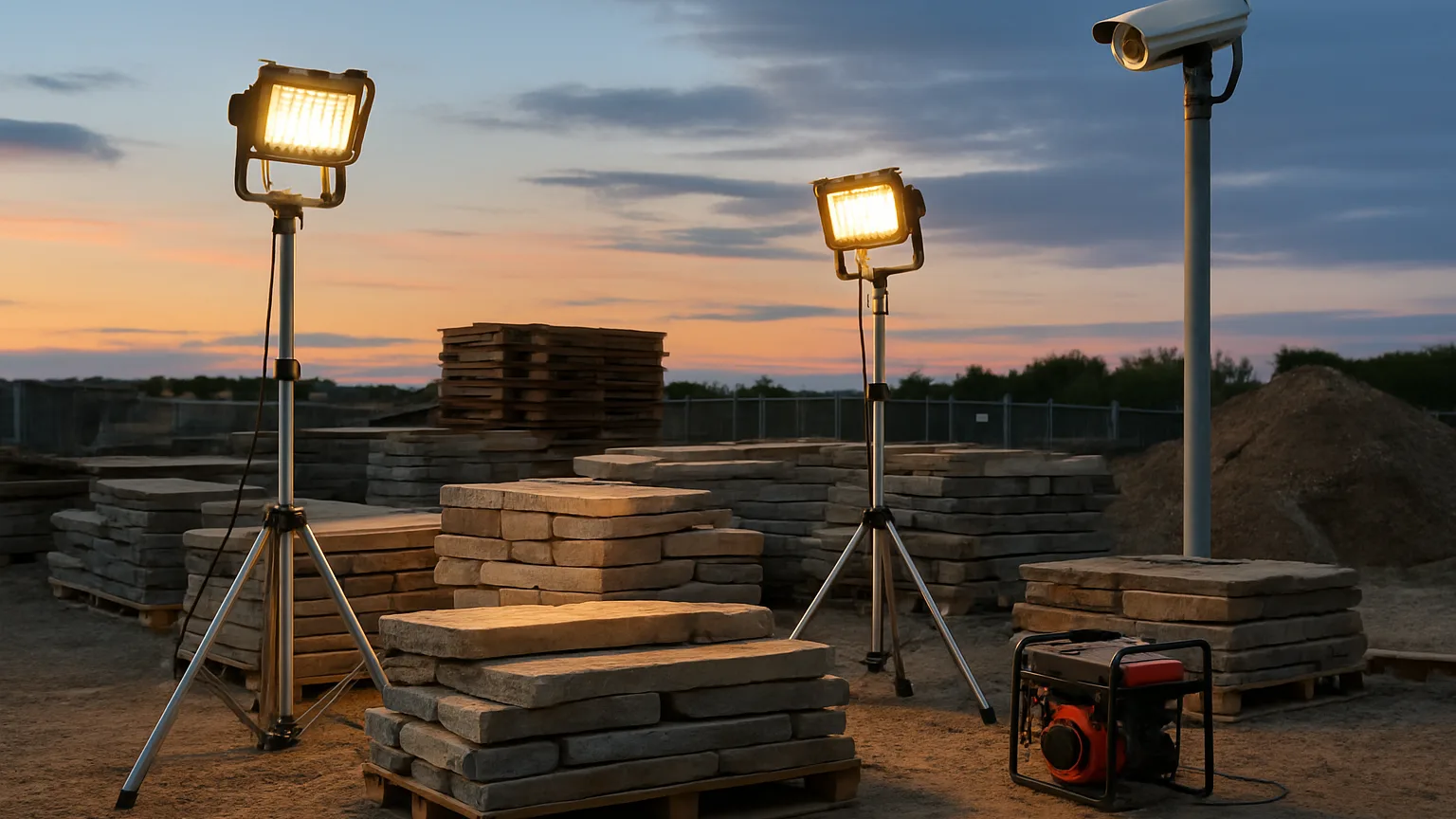
Lighting and cameras work together or barely at all. A bright floodlight aimed at a camera lens washes out the only footage you will ever need. Point light down at the ground and material, then place cameras behind the light source so faces and plates land in the frame instead of glare.
Three positions cover most residential builds: one on the material staging area, one on the side yard or gate where people actually enter, and one on the street where a vehicle would park to load. Motion lights on the path between the gate and the stacks matter more than a bright fixture over the front door. Thieves avoid changing light. Constant light they simply work under.
Document Now, Argue Never
Insurance claims and police reports live or die on documentation. Do this the day material arrives, not the day it disappears.
- Photograph serial number plates on every appliance, heater, tool, and generator, including the crate label.
- Save invoices and packing slips in one folder with the photos, dated.
- Shoot a wide video walkthrough at the end of each week showing what is on site and how it is secured.
- Mark your property with an engraver or paint code in a spot a reseller will not think to check.
- Log deliveries by piece count so a partial theft is provable, not a guess.
Share that folder with your contractor. When both sides have the same record, missing material becomes a solvable problem instead of a standoff. It also gives law enforcement something usable, since recovered goods without serial numbers rarely find their way home.
The First Pallet Sets the Tone
Protecting an outdoor build is not one big move. It is a stack of small decisions that all point the same direction: less material sitting idle, fewer things visible from the street, everything either enclosed or attached, and a record of what exists before anyone has a reason to question it. Stage deliveries to match the work. Give the valuable pieces a locked place to sleep. Light the paths people actually walk and put the cameras where the light is not blinding them. Write down the serial numbers while the crates are still sealed.
Season changes the math on all of this, and the plan that carries you through a bright summer build needs adjusting once daylight shrinks and the house sits empty for holiday travel. That is exactly what the next part covers, walking through how to secure an in progress or finished project when shorter days, bolder thieves becomes the real concern. Anchoring pergolas, fire tables, and heaters, layering fencing with cameras and lighting, and closing the documentation gaps before a long absence all get their own treatment there. Get the first pallet right, and the rest of the build stays yours.
